Germline genetic testing
Universal germline genetic testing (GGT) proposes testing all prostate cancer patients, as current criteria could miss up to 42–55% of actionable pathogenic germline variants. A recent study (PROCLAIM) showed that the prevalence of these variants is similar in both patients who meet testing criteria and those who do not, highlighting the limitations of current guidelines. Implementing universal GGT would allow for the identification of more hereditary cases and benefit at-risk family members through prevention and early detection, although it would require more resources and innovative genetic care models, especially in regions with limited access such as Latin America.
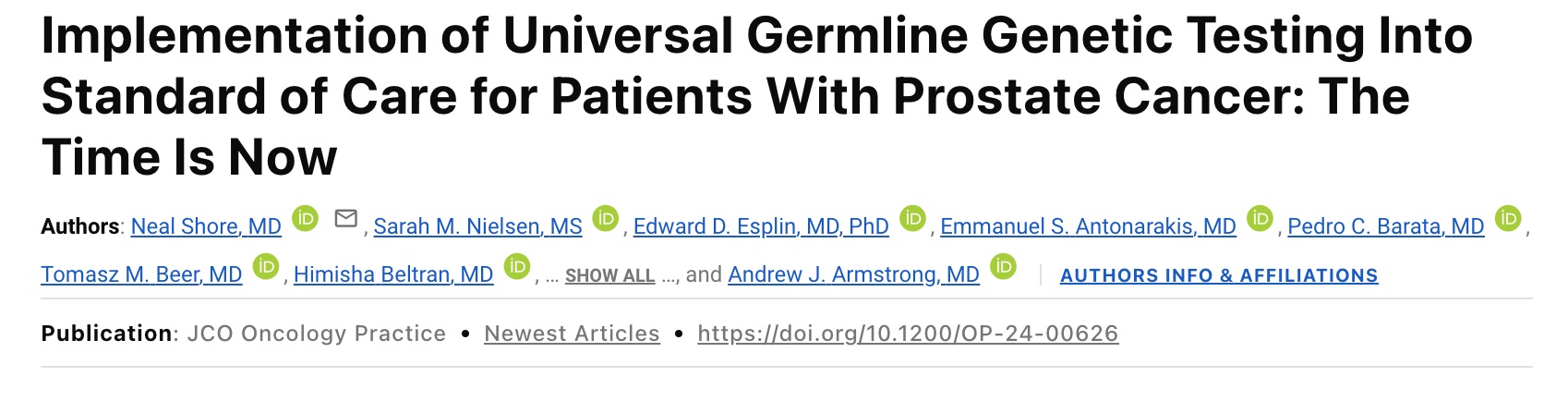
Universal germline genetic testing (GGT) allows all cancer patients, regardless of stage, pathology, or family history, to undergo testing. The importance of universal GGT has been highlighted by several studies showing that criteria-based GGT may miss up to 55% of patients with actionable pathogenic germline variants (PGVs). The concept of universal germline testing is already being applied to tumors such as breast, ovarian, and pancreatic cancer, but not yet to prostate cancer.
Prostate cancer has one of the lowest rates of GGT utilization (1% overall and 4%–13% in metastatic or castration-resistant disease). These rates are even lower among Latin American populations. Racial disparities and reliance on accurate family history also limit the access and utility of GGT. GGT is crucial for cascade testing of at-risk family members, identifying those who could benefit from risk-reduction interventions and enhanced screening to detect malignancies at early stages, including not only prostate cancer but also breast, ovarian, pancreatic, and colorectal cancers.
A recent study published in JCO by Neal Shore et al. proposes performing germline genetic testing on all prostate cancer patients to evaluate PGVs in genes associated with hereditary cancer that have implications for clinical assessment and management.
The PROCLAIM trial (PROstate Cancer registry in Large patient population AIMed to assess efficacy in germline testing) investigated the impact of universal GGT in a prospective, unselected population of patients treated primarily in community urology practices, where most prostate cancer care is delivered. Of the 958 patients with evaluable results, only 50% met NCCN testing criteria. The majority (65%) had localized disease of
low or intermediate risk. Overall, the prevalence of PGVs in the cohort was 7.7%. As predicted, the prevalence of PGVs showed no significant differences between patients who met the criteria for testing and those who did not (8.8% versus 6.6%, respectively).
Most importantly, 42% of patients with PGVs would not have been detected if guideline criteria had been followed. Extrapolating these findings to the estimated 288,300 new prostate cancer cases diagnosed in 2023, restricting GGT only to patients who meet the criteria could result in approximately 9,000 men with hereditary forms of prostate cancer or other cancers going undetected each year.
Recommending GGT for all newly diagnosed prostate cancer patients would represent a significant increase in the number of people eligible for testing, which would require additional implementation resources and education. However, this is not an insurmountable challenge. In fact, the persistent shortage of genetics professionals has spurred research aimed at leveraging technology and developing new models of genetic service delivery, many of which have already been used in prostate cancer patients.
The discussion remains open on this topic, especially regarding the possibility of its application in regions with limited resources and access, such as Latin America.

Dr. Federico Losco
Federico is a prominent Argentinian Oncologist, Director of the Latin America Oncology Group (LACOG) and Chief Medical Officer of Marco