Cost-effectiveness of orchiectomy as a treatment modality in patients with advanced prostate cancer.
A study published in the Journal of Global Oncology by Fernando Sabino Marques Monteiro analyzed the economic impact of treating metastatic castration-sensitive prostate cancer within Brazil's public health system. Most patients receive chemical castration, which is significantly more expensive than bilateral orchiectomy. The analysis showed that if surgical castration had been used in all cases, the system could have saved over $620 million USD over 11 years—resources that could have been redirected to expand access to innovative therapies like abiraterone. The study highlights the importance of pharmacoeconomic analyses in optimizing resources and improving access to treatments in middle-income countries.
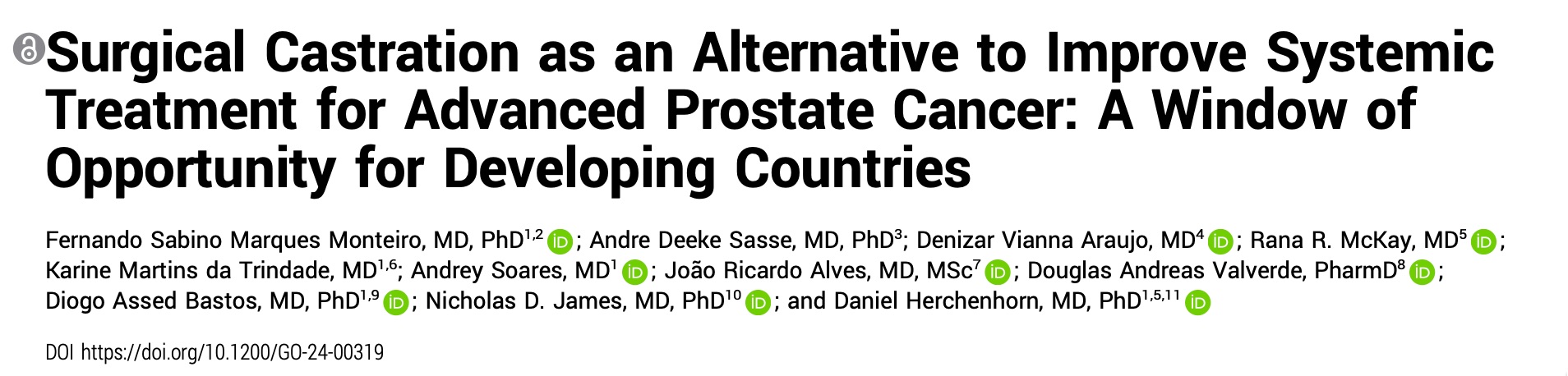
The recent article published in the Journal of Global Oncology by Fernando Sabino Marques Monteiro, MD, PhD, and colleagues puts treatments for metastatic castration-sensitive prostate cancer (mCSPC) into context for a population with limited access to therapies, such as the Brazilian Public Health System (SUS).
This system serves approximately 71,730 prostate cancer patients each year, for whom androgen deprivation therapy (ADT) is the primary treatment for mCSPC. Androgen receptor pathway inhibitors (ARPIs) are not accessible through the SUS. Using the SUS as a model, this study evaluates the long-term economic effect of surgical versus medical castration in the treatment of mCSPC to design strategies for cost reduction and the incorporation of ARPIs in developing countries.
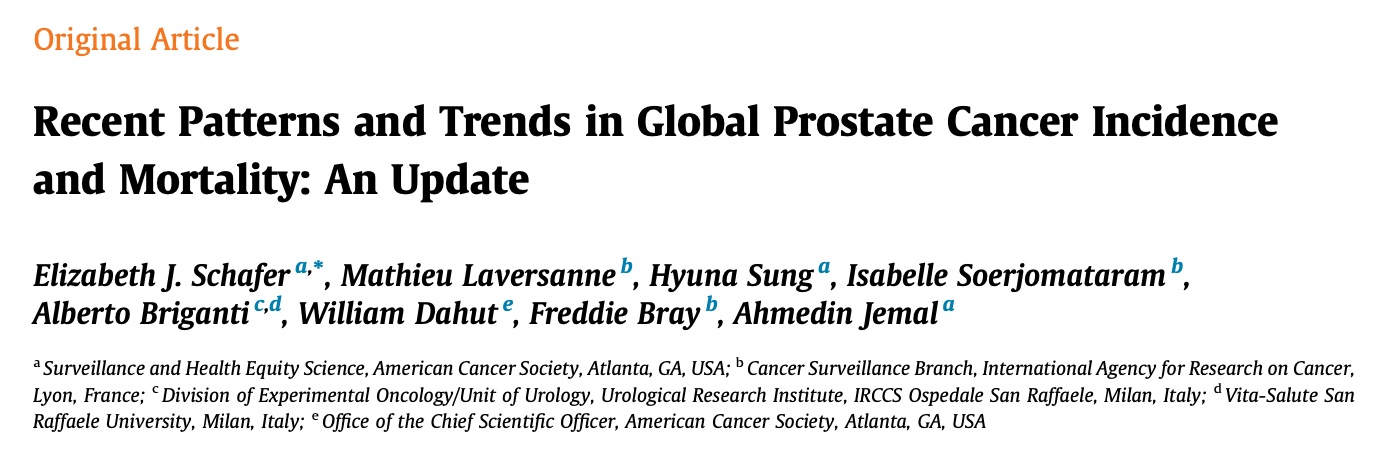
Data from mCSPC patients in the SUS database were analyzed from January 1, 2011, to December 31, 2021. Of the 274,519 mCSPC patients who received active treatment during the 11-year study period, 90% (n = 246,683) underwent chemical castration and 10% (n = 27,836) underwent bilateral subcapsular orchiectomy (BSO).
The median duration of chemical castration was 28 months. The SUS spent an estimated total of $665,552,091.40 USD on chemical castration and $5,939,348.47 USD on BSO, respectively. The cost per patient was $2,698 USD for chemical castration and $213.37 USD for BSO.
Hypothetically, if all mCSPC patients had undergone BSO, the total direct cost to the SUS would have been $42,774,832.20 USD, saving $622,777,259.20 USD over 11 years, which would make it possible to offer low-dose abiraterone to 65% of mCSPC patients.
Based on this extensive financial analysis of the world's largest public health system database, BSO appears to be a valuable alternative to chemical castration for treating mCSPC.
The pharmacoeconomic analysis presented in the article is of great interest, particularly for its meticulous approach to evaluating the cost-benefit ratio in healthcare. Such studies are invaluable as models to be replicated in different Latin American countries, adapting to the specificities of each health system, local economic realities, and negotiated costs for pharmaceuticals and medical procedures.
Health coverage in Latin America is diverse, ranging from universal systems to fragmented models. This variability directly influences accessibility and the costs borne by patients and states, highlighting the need for contextual analyses. A model based on this article could provide critical tools to identify gaps in
coverage, optimize resources, and ensure financial sustainability in each health system.
The article provides a key example by analyzing orchiectomy as a cost-effective option compared to chemical castration for the management of advanced prostate cancer. Despite being an invasive surgical procedure, orchiectomy represents a lower-cost alternative with long-term clinical outcomes comparable to the use of long-term analogs, which significantly increase healthcare costs.
This approach highlights the importance of prioritizing interventions that, in addition to being effective, can alleviate the financial burden on both health systems and patients. This finding reinforces the importance of including such evaluations in clinical and health policy decisions.
Furthermore, the article underscores the importance of evaluating costs with a view to expanding access to innovative therapies, many of which are transforming standard clinical practice. While these treatments often involve higher initial costs, they can significantly reduce the long-term economic impact by improving health outcomes, quality of life, and patient productivity.
This analysis is not only a valuable reference but also a call to action for health systems in the region. Implementing rigorous and personalized economic evaluations could be key to achieving more equitable and sustainable coverage, maximizing the clinical and social benefits of medical innovations while optimizing cost-effective strategies, such as the appropriate incorporation of procedures like orchiectomy.
Author of this publication:
Dr. Noelia Silveyra
Adjunct Professor of Medical Oncology at UdelaR. Head of the Uro-oncology area at the Academic Unit of Oncology.

Dra. Noelia Silveyra
Prof. Adjunta Oncologia Médica en UdelaR. Encargada del área urooncologica de la Unidad académica de Oncologia.